
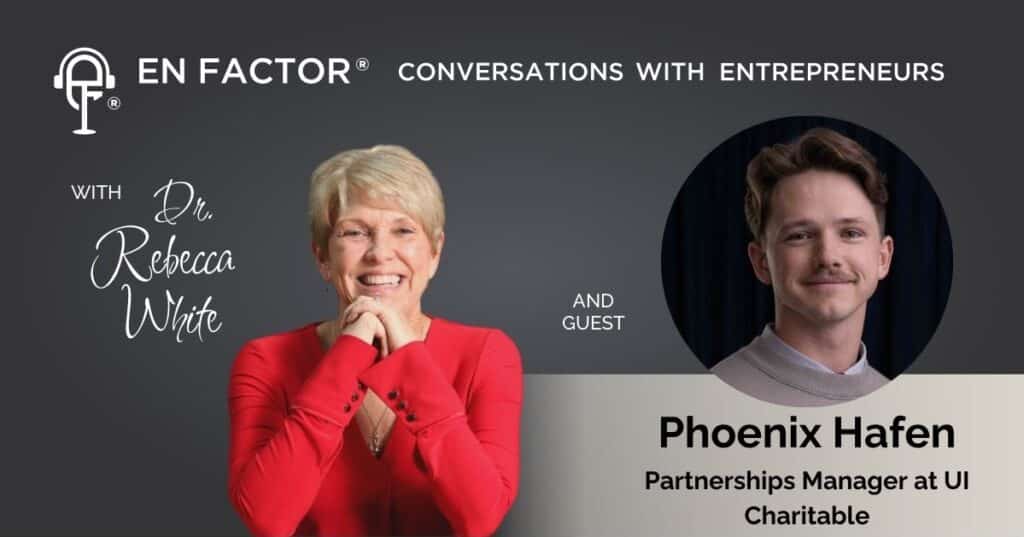
I started this podcast to democratize my research on entrepreneurial mindset. Every so often a conversation pushes me into territory I didn’t expect. My recent episode with Phoenix Hafen of UI Charitable did exactly that. He opened with a statement that sounded almost wrong: never give cash to charity.
He wasn’t discouraging generosity. He was pointing out a pattern that is commonly overlooked. Cash is the least tax-efficient asset you can donate.
Your largest gifts are often sitting inside your balance sheet, in assets you don\’t even know how to give.
The Double Benefit Most Donors Miss
Here’s the logic Phoenix laid out. When you donate cash, you get one benefit, a deduction off your adjusted gross income. When you donate an appreciated asset directly, whether it’s public stock, real estate, or a stake in your business, you get two.
You deduct the full fair market value and you avoid capital gains tax on the appreciation. The IRS allows this double dip in very few circumstances. This is one of them.
For entrepreneurs approaching an exit, this matters enormously. Phoenix described clients who donate a portion of their business into a donor-advised fund before a sale closes. The deduction is maximized, the proceeds flow into the fund, and the giving happens on the donor’s timeline.
Phoenix shared a real estate example that illustrated both the opportunity and the friction. A donor contributed a greenhouse property that had been appraised at around $700,000. The actual sale came in closer to half that. That gap, between appraisal and market reality, created complications for the deduction calculation and took time to resolve. It wasn’t a clean transaction. But the donor still avoided a significant capital gains bill and directed meaningful proceeds to causes they cared about. The win was real. It just required patience and the right advisors to navigate it.
Philanthropy as an Entrepreneurial Tool
What struck me most were the creative structures. One donor issued a working capital loan from his donor-advised fund to a refrigerated trucking startup in Africa. The repayments flow back into the fund, creating what Phoenix called perpetual philanthropy.
The loan repays back into the fund, and the fund keeps giving. That’s perpetual philanthropy.
Another donor in Silicon Valley uses his fund to become the first investor in emerging venture fund managers. That’s how he gives back to his community, through charitable capital that keeps working.
I used to think of philanthropy as something you plan at the end of a career. After this conversation, I see it as a strategic discipline built alongside your company. And the execution depends on the right team around you.
Phoenix was clear about this during our conversation. Non-cash donations introduce real complexity. When you’re contributing real estate, private business interests, or a securities portfolio, your accountant, banker, financial advisor, and attorney all need to be in the room. UI Charitable functions as the philanthropic back office in that team — coordinating with each of those advisors to make sure the charitable strategy is aligned with the broader financial picture. It’s not a replacement for any one of them. It’s the connective tissue between them.
Start Before You Think You’re Ready
If you’re early in your entrepreneurial journey, Phoenix’s advice is simple. Spend time now discovering what you care about, which geographies, which problems, which communities. Volunteer your time. Build relationships with organizations doing great work.
The structural planning becomes relevant once your annual giving approaches the standard deduction, roughly $32,000 for a married couple filing jointly. The intentionality can start today.
Phoenix put it plainly: entrepreneurs bring enormous rigor to the businesses they build, and that rigor rarely carries over into their giving.
You would never launch a product without knowing your customer. Why would you give without knowing your cause?
I highly recommend you change that in your own planning.
The Takeaways
Three things stayed with me from this episode. Give appreciated assets instead of cash, because the tax math rewards it. Consider a donor-advised fund as a flexible vehicle for separating the tax event from the giving itself. Approach your philanthropy with the same intentionality you bring to your company.
Meaning and purpose sit at the core of entrepreneurial intelligence. Listen to the full conversation with Phoenix Hafen on The En Factor, and you’ll hear how legacy planning can start long before the exit.
Note: A first draft of this article was written using AI.