
I used to think data and creativity lived in different worlds. The artist paints. The analyst measures. Never the two shall meet.
But after many conversations with entrepreneurs and building my own ventures alongside my teaching career, I’ve learned something that challenges that assumption entirely.
Data doesn’t kill creativity. It focuses it.
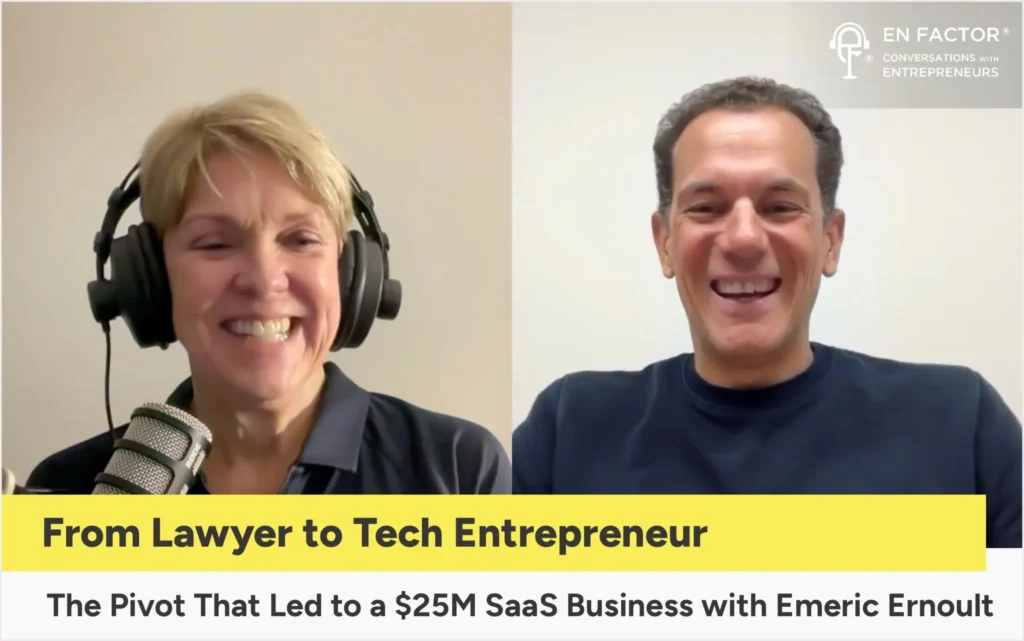
When Emeric Ernoult, CEO of Agora Pulse, told me that “data sharpens creativity,” something clicked. We spend so much time worrying that metrics will box us in, that we forget what happens when you actually understand the box you’re working with.
Understanding the Box You’re In
People talk about thinking outside the box all the time. But here’s what I’ve learned: you can’t think outside the box if you don’t know what the box is made of.
All your assumptions, everything you know, everything you bring to the table—that creates the framework. The constraints. The box.
And creativity without that framework? You’re shooting in the dark.
I saw this firsthand when I wrote See, Do, Repeat: The Practice of Entrepreneurship. I wrote it for college students and startup entrepreneurs. That was my assumption about the audience. That was my box.
Then students started telling me their parents—successful business owners, some who had already exited—were reading it and seeing themselves in every chapter.
My assumption was wrong. And that data changed everything.
Understanding that my actual audience included experienced entrepreneurs didn’t limit my creativity. It expanded it. I started listening differently in podcast interviews. I started asking different questions. I started pulling out lessons that would resonate with someone at the exit stage, not just the startup stage.
The Emotional Data We Ignore
When you talk about data in business, most people think about conversion rates and revenue metrics. But there’s another kind of data that matters just as much.
I call it emotional data.
Through all these conversations with entrepreneurs, I’ve learned that the only thing harder than starting a business is exiting one, and the reasons are rarely about the financials.
It’s about loyalty to your customers. Loyalty to your employees. The identity you’ve built around being the founder.
You don’t see that in a spreadsheet, but it’s data. It’s information about what matters, what drives decisions, what keeps people up at night.
One of my podcast listeners is struggling with exit right now. Talking with them has taught me that entrepreneurship education misses this entirely. We focus on starting and scaling. We skip the part where you have to let go.
That’s a gap in the data. And recognizing it creates space for new solutions.
Building Entrepreneurial Intelligence
This is why I’m so focused on what I call Entrepreneurial Intelligence (EI). It’s the collective wisdom you gain from accessing other people’s experiences.
After 175+ entrepreneur interviews, I’m not just teaching theory anymore. I’m teaching from a database of real stories, real failures, real pivots, real exits.
And here’s what that data reveals: entrepreneurial skills aren’t innate traits. They’re learnable.
People think you’re either born resilient or you’re not. Born optimistic or you’re not. Born with risk tolerance or you’re not.
The research, and my experience, says otherwise.
Optimism is learnable. Cognitive awareness is learnable. Emotional regulation is learnable.
Sometimes it’s about acting until you believe. Act as if you’re confident before the confidence fully arrives. That’s not fake it till you make it. That’s practice.
It’s the core of my See, Do, Repeat model. You see what needs to be done. You do it, even imperfectly. You repeat until it becomes part of who you are.
The Vulnerability of Starting
When I started the En Factor podcast in 2019, I was terrified.
I’d been interviewing entrepreneurs in my classroom for 30 years. But putting those conversations out globally? That felt completely different.
I was nervous nobody would listen. Nervous people would think it wasn’t good enough. Nervous someone would misunderstand or misconstrue what we were saying.
But I had to act as if I knew what I was doing.
Two of my graduate students at the University of Tampa said they’d handle the technology if I’d do the interviews. We launched five episodes at once at a conference. I had no idea if it would work.
That vulnerability—that willingness to step out without knowing—that’s what every entrepreneur faces. And I couldn’t teach it authentically until I’d lived it myself.
Now I can tell my students with complete honesty: I’ve been there. I know what it feels like to put yourself out there. To risk criticism. To wonder if it matters.
And I can also tell them: you learn by doing. Not by waiting until you’re ready.
From Traditional Education to Podagogy
This is why I’m building the EI Lab. Traditional education has value. I’ve spent my career in it.
But it’s not accessible to everyone. Not everyone can afford a master’s degree in entrepreneurship. Not everyone can leave their job, move their family, uproot their life to sit in a classroom.
What if you’re a nurse who wants to build a healthcare business on the side? Or a mid-career professional ready to pursue your passion? Or a retiree with decades of experience to share?
You need learning that fits your life. That’s affordable. That’s based on real experience, not just theory.
That’s what I call podagogy—the art and science of teaching and learning through podcasts. It combines my 20 years of research on entrepreneurial mindset with the collective intelligence of all the entrepreneurs I have interviewed.
It’s Entrepreneurial Intelligence in action. And it’s powered by data.
The EI Lab focuses on two critical areas that traditional education often misses: cognitive awareness and emotional regulation. These aren’t soft skills. They’re the foundation of how you learn and how you respond when things get hard.
Because entrepreneurship is a learning journey. You start with assumptions. You test them. You get data back—sometimes painful data. And you adjust.
The data doesn’t limit you. It shows you where to go next.
The Clarity That Comes From Constraints
When I bootstrapped the podcast with my students, I had constraints. I didn’t know the technology. I didn’t have a big budget. I didn’t have a marketing team.
Those constraints forced creativity.
We had to figure out what mattered most. We had to focus on the conversations, not the production value. We had to build an audience one listener at a time.
And those constraints gave me clarity about purpose. I wasn’t building a podcast to be famous. I was building it to share the entrepreneurial mindset model I’d spent 20 years researching. To make that knowledge accessible to people who needed it.
That clarity—knowing exactly what you’re building and why—that comes from understanding your constraints. Your data. Your box.
And once you understand the box, you can decide which walls to push against and which ones to work within.
What This Means for You
If you’re building something—a business, a platform, a movement—don’t be afraid of data. Don’t treat it like the enemy of creativity.
Data tells you what’s working. What’s resonating. Where you’re making assumptions that need testing.
It tells you who your real audience is, not who you think it should be.
It reveals the emotional dimensions you might be missing—the loyalty, the identity, the fear, the hope.
And it gives you the clarity to focus your creative energy where it matters most.
You don’t need to know everything before you start. I didn’t. But you do need to be willing to learn as you go. To collect data—quantitative and emotional. To adjust when your assumptions turn out to be wrong.
That’s not limiting. That’s liberating.
Because when you understand the box you’re in, you stop wasting energy on things that don’t matter. You stop guessing. You start creating with intention.
And that’s when data becomes your creative compass, not your creative constraint.
Keep Learning
Want to dig deeper into entrepreneurial mindset and learn from the collective intelligence of hundreds of entrepreneurs? Check out the EI Lab—a new kind of learning experience that combines research, real stories, and practical tools to help you build your entrepreneurial intelligence.
And if you want to hear more conversations like this one with Emeric Ernoult, check out the En Factor podcast. New episodes drop every month, and each one is designed to help you see entrepreneurship differently.
Because the most powerful force for transformational change isn’t just having a great idea. It’s having the mindset to learn, adapt, and execute on that idea—even when the data surprises you.
Note: A first draft of this article was written using AI.